

-

Refco 5/16″ Quick Seal Caps – Pack of 10
£52.11 + VATPart No : 4664618 Pack of 10 quick seal caps with rubber gaskets 1/2″-20UNF
SKU: 4664618
-
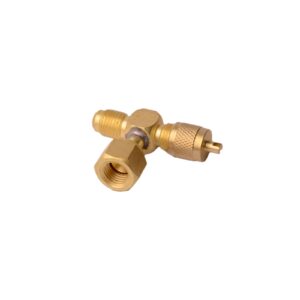
DiversiTech Access Fitting Swivel Tee flare on run 1/4″ – VST-4X
£8.37 + VATPart No : VST-4X Swivel Tee for 1/4″ Access on Run x 1/4″ Female Flare – no depressor A convenient low-cost port for refrigeration servicing. May be installed in any position on either high or low side for charging, purging, quick testing or pressure checking. DiversiTech’s access fittings have 1/4in. SAE male flare access ports…
SKU: VST-4X
-
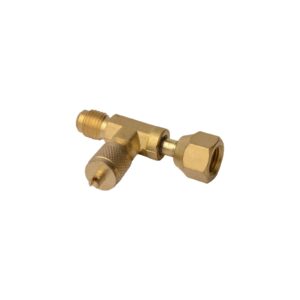
DiversiTech Access Fitting Swivel Tee w/no Depressor 1/4″ – VST-44X
£11.82 + VATPart No : VST-44X 1/4″ Access on run x 1/4″ access on “T” – female swivel on run A convenient low-cost port for refrigeration servicing. May be installed in any position on either high or low side for charging, purging, quick testing or pressure checking. DiversiTech’s access fittings have 1/4in. SAE male flare access ports…
SKU: VST-44X
-
DiversiTech Access Fitting Swivel Tee flare on run 1/4″ – VST-4
£6.25 + VATPart No : VST4 Swivel Tee for 1/4″ Access on Run x 1/4″ Female Flare A convenient low-cost port for refrigeration servicing. May be installed in any position on either high or low side for charging, purging, quick testing or pressure checking. DiversiTech’s access fittings have 1/4in. SAE male flare access ports and include a…
SKU: VST4
-
DiversiTech Access Fitting Swivel Tee w/Permanent Depressor 1/4″ – VST-44
£6.44 + VATPart No : VST-44 1/4″ Access on run x 1/4″ access on “T” – female swivel on run A convenient low-cost port for refrigeration servicing. May be installed in any position on either high or low side for charging, purging, quick testing or pressure checking. DiversiTech’s access fittings have 1/4in. SAE male flare access ports…
SKU: VST-44
-
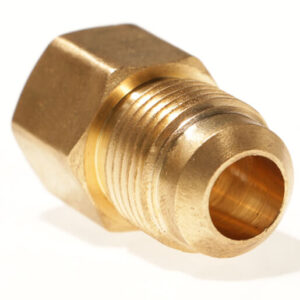
3/8″ F x 1/4″ M Brass Fitting inc 3/8″ Gasket
£11.00 + VAT3/8″ F X 1/4″ M Brass Fitting inc 3/8″ Gasket reducing flare fitting.
SKU: LFFT200
-
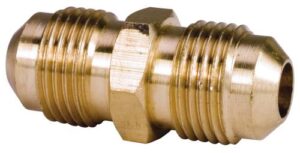
Brass Flare Union
Price range: £3.00 through £6.00 + VATPart No : LFFT152 / LFFT154 / LFFT155 Brass Flare Union
SKU: LFFT15*
Select options This product has multiple variants. The options may be chosen on the product page -
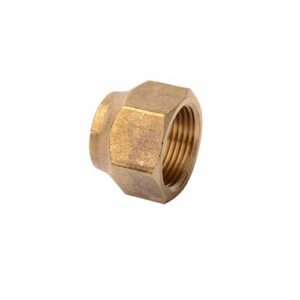
Brass Flare Nut
Price range: £1.45 through £8.88 + VATPart No : LFFT11* Brass Flare Nuts – short forged. Sizes stocked , 1/4″ , 3/8″, 1/2″, 5/8″, 3/4″
SKU: LFFT11*
Select options This product has multiple variants. The options may be chosen on the product page -

1/4″ Schrader Access Valve with Copper
£1.55 + VATPart No : 530029 1/4″ Schrader Access valve with copper Access x 1/4″ copper extended (100mm) ODS
SKU: 530029
Refrigeration Fittings FAQs
What materials are refrigeration fittings made from?
Refrigeration fittings must withstand varying pressures and temperatures, making the choice of material essential for ensuring longevity and efficiency. Here’s a closer look at 2 popular materials commonly used in refrigeration fittings and their benefits.
Brass fittings are one of the most popular materials, offering a combination of strength, corrosion resistance and machinability.
Copper is another widely used material in refrigeration fittings. Its excellent thermal conductivity makes it suitable for systems that require efficient heat transfer.
What size are refrigeration fittings?
Refrigeration fittings come in various sizes to accommodate different systems and applications. The size of a fitting typically refers to its nominal pipe size (NPS) or diameter, which is measured in inches. Common sizes for refrigeration fittings include:
1/4 inch
3/8 inch
1/2 inch
5/8 inch and above
Always refer to the manufacturer’s specifications or consult a professional if you’re unsure about the appropriate size for your application.
What are the advantages of using refrigeration flare fittings?
Refrigeration flare fittings offer several advantages that make them a popular choice in HVAC and refrigeration systems:
The design of flare fittings offer leak resistance, creating a tight seal when the flared end of the pipe is compressed against the fitting.
Flare fittings are typically made from robust materials like brass or stainless steel, providing excellent resistance to corrosion and wear over time.
Flare fittings are relatively easy to install and remove, making them convenient for technicians.
They are compatible with various refrigerants and can handle high-pressure applications.
The mechanical connection provided by flare fittings helps absorb vibrations, reducing the risk of joint failure and enhancing system reliability.
Flare fittings can withstand a wide range of temperatures.
Overall, these advantages make flare fittings a reliable choice opted by many engineers.